A dynamic energy simulation is the best way to simulate a building in real time and accurately assess its behavior. Because a dynamic simulation takes into account various parameters, such as solar gains and the presence of people in the building, this simulation provides more accurate estimates than a static calculation of heat and cooling demand.
-2048.webp)
You can call on Qern for a customized dynamic energy simulation (or ‘energy design study’) as early as the design phase of your construction project. Our advanced software (DesignBuilder) simulates the indoor climate of your building and mimics how your building responds to climate changes (with differences between the seasons). The software also takes into account the techniques (HVAC) and materials you want to use in your existing building.
Accurate monitoring
Qern is a pioneer in performing dynamic energy simulations. And we are constantly improving our techniques for these simulations. For example, we now have monitoring systems that we link to our simulation software. This makes it possible to test the performance of your building against the simulation. Based on these results, we optimize the calibration of the installations used, among other things.
Examples of elements that are taken into account:
- Building construction down to the smallest detail and per room
- Realistic climate data based on local data
- Natural sunlight
- Heat transfer between different elements in the building
- Shading elements in and around the building
- Schematization of occupancy, HVAC, natural ventilation, etc.
- Internal heat gains (e.g., from lighting, occupancy, etc.)
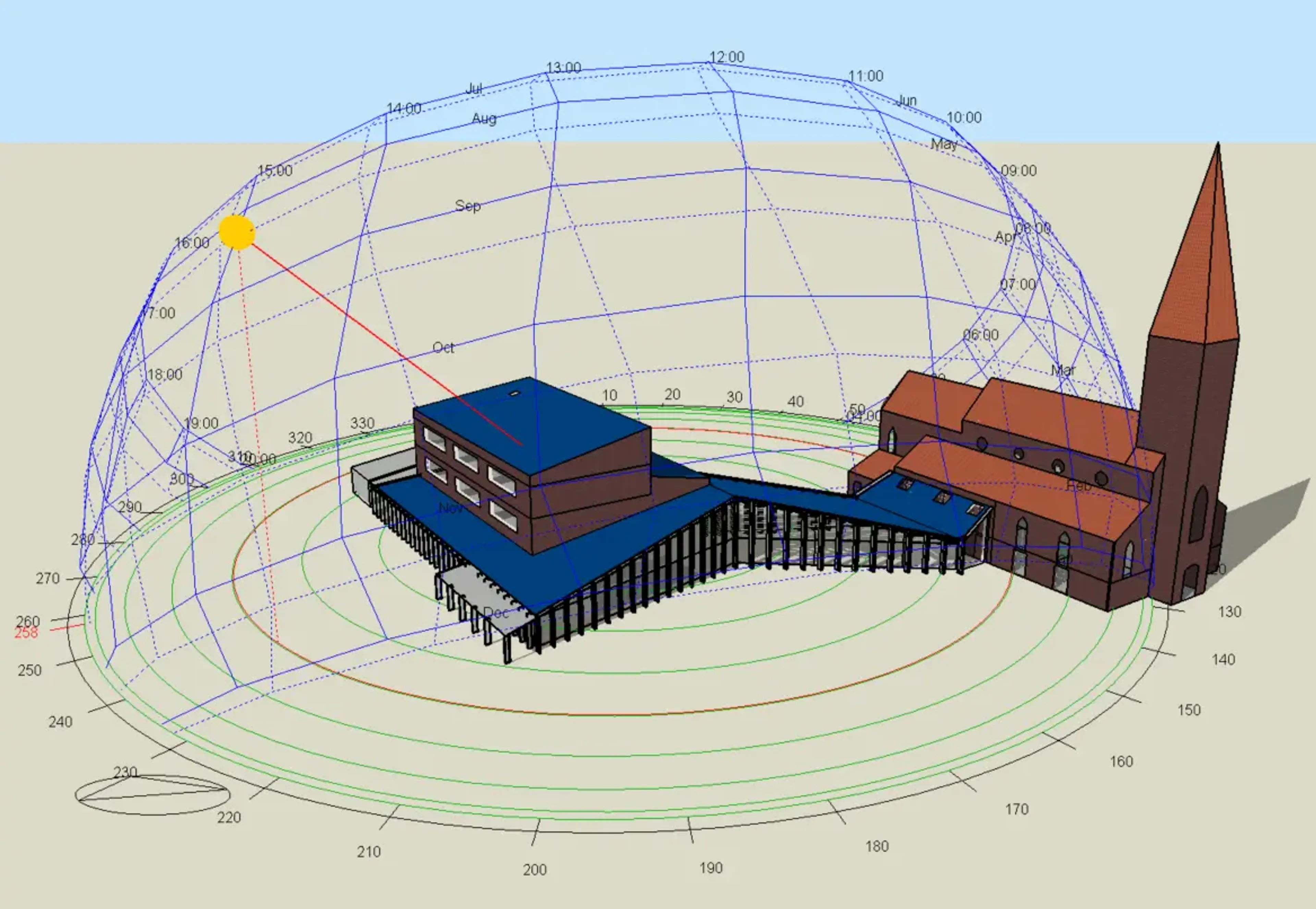
Wat haal je uit een dynamische gebouwsimulatie?
Dynamic energy simulation provides you with accurate data describing the behavior of your building. This takes into account the climatic conditions of the environment across the different seasons:
- Display of temperature, comfort, humidity, etc. exceedance hours
- Overview of internal loads (people, lighting, computers, etc.)
- Solar gains and influence of shading
- Dimensioning of technical installations
- Daylight optimization
- Passive cooling and natural ventilation
- BREEAM, results for modules ENE1, HEA1, and HEA10
- Display of effective energy consumption
- Graphical representations of the influence of various measures